
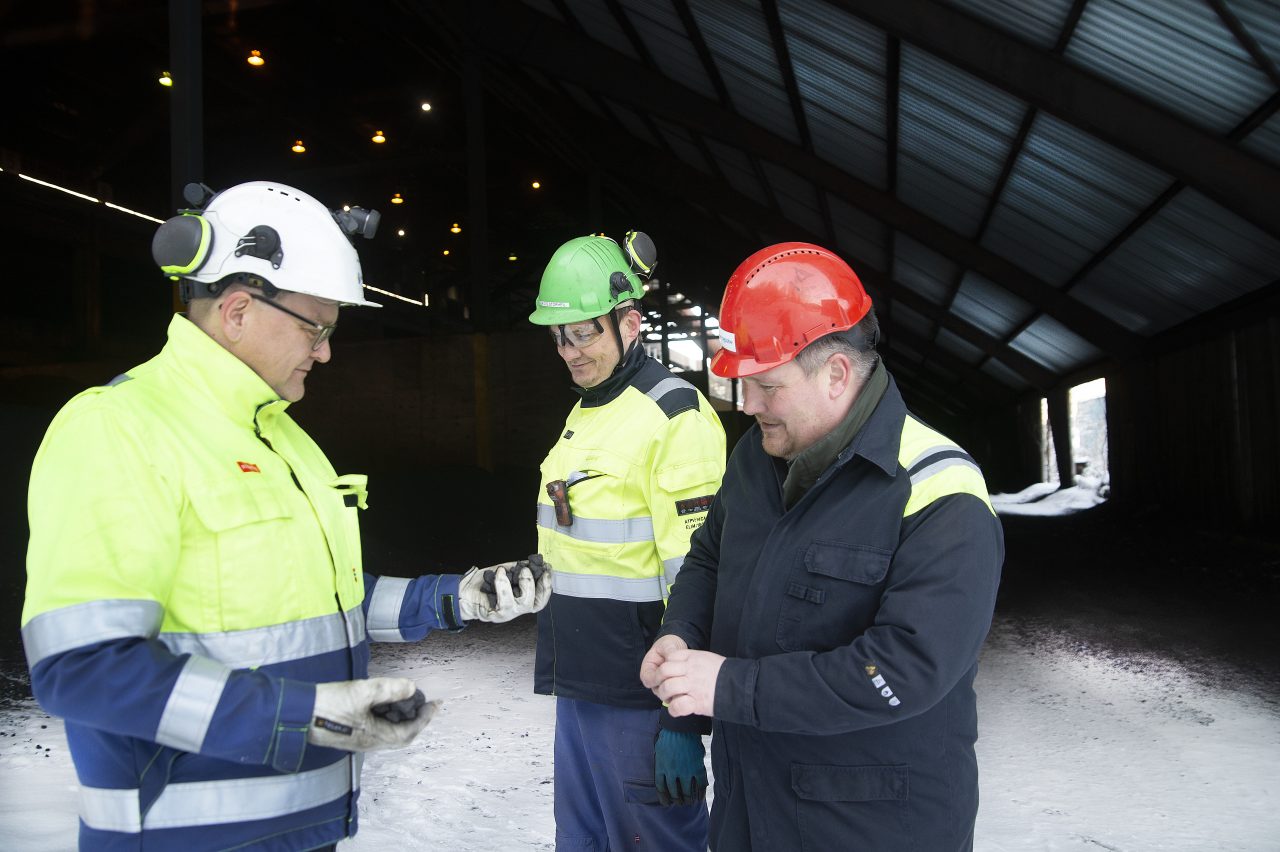
Ferroglobe Mangan Norge aims to cut fossil emissions with biogenic carbon
27 January, 2026 11:00 Del DelFerroglobe Mangan Norge has received NOK 67 million in funding from Enova to test biogenic carbon as a replacement for today’s fossil coke. The project, Bioglobe, has the potential to significantly reduce emissions while strengthening the company’s competitiveness in a global market with increasingly strict climate requirements.
Bioglobe is being developed in close collaboration with SINTEF Helgeland. The goal is to replace up to half of the fossil carbon used in production within the next ten to fifteen years.
“Producing manganese requires carbon as a reducing agent in the final stage. We cannot eliminate carbon from the process, but we can influence where it comes from. With biogenic carbon, we get emissions that do not increase the amount of CO₂ in the atmosphere,” says Managing Director Knut Gullesen.
Today, the company uses metallurgical coke, which ensures high process stability but also causes significant CO₂ emissions. For every tonne of coke consumed, Ferroglobe must buy emission allowances corresponding to three tonnes of CO₂.
“If we can replace part of the coke with biogenic carbon, meaning renewable carbon sources, the amount of CO₂ in the atmosphere does not increase,” explains HSE Manager Geir Ove Storheil.
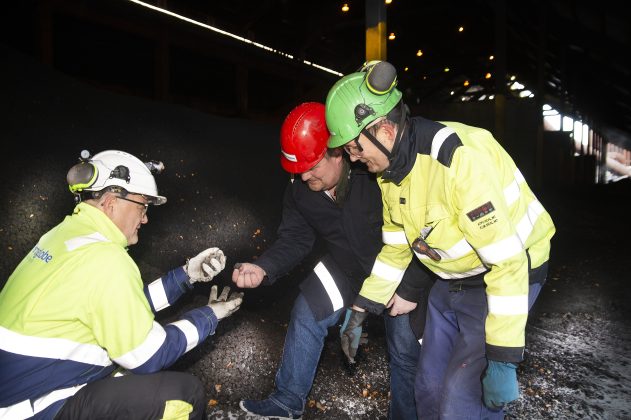
Conventional charcoal is too reactive for Ferroglobe’s furnaces. Therefore, new, more stable bio-based carbon sources must be developed and tested in both the sintering plant and the smelting process, two stages that behave differently and each require their own solutions.
Enova: A demanding and important project
Enova considers Bioglobe to be technically challenging but crucial for the green transition in the process industry.
“Switching from fossil coal to biocarbon may seem simple from the outside, but it is a project with significant risk. The processes must be carried out differently, and there are many technical challenges. That is precisely why this project aligns so well with Enova’s mandate,” says Enova Senior Advisor Ståle Kvernerød.
Enova covers 45 percent of the costs. The remainder must be financed by Ferroglobe.
“It says a lot about their willingness to invest and their belief in the benefits this can bring. From Enova’s point of view, this is a perfect project: It reduces fossil emissions and helps develop the biocarbon value chain that Norway needs,” Kvernerød says.
SINTEF Helgeland is a key partner
Gullesen highlights the collaboration with SINTEF Helgeland as essential to the project’s progress.
“We have had excellent support from SINTEF Helgeland, both in development and methodology. They have crucial expertise.”
Managing Director of SINTEF Helgeland, Stein Espen Bøe, emphasizes the importance of the knowledge now being built.
“This is research that not only benefits Ferroglobe but can reduce emissions across the process industry. We are pleased to contribute with the competence we have in processes, material understanding and scaling.”
Benefits for the industrial park
Three-quarters of the CO-gas from Ferroglobe’s furnaces is delivered to other companies in Mo Industripark, including 7-Steel and SMA. Lower emissions from Ferroglobe will therefore also reduce the carbon footprint of their customers’ end products.
The road ahead
The project will undergo extensive testing in both the sintering and smelting processes before full-scale implementation can be considered.
Gullesen looks ahead with strong optimism.
“If we succeed, we achieve lower emissions, stronger competitiveness and a clear position in a rapidly evolving market. This is an initiative we are determined to succeed with.”
Categorised in: Frontpage, Industripark News
Del Del