
“Thermal Battery” to Be Tested at Mo Industripark
15 October, 2026 13:14 Del DelLarge amounts of low-temperature heat from industry are currently released without being utilized. In a new EU project, SINTEF Helgeland, Mo Industripark and Ferroglobe Mangan Norge will investigate whether this energy can be stored and later converted back into electricity.
The four-year research project is called RECITHERM. The acronym stands for a lengthy English title, but the basic idea is much easier to explain.
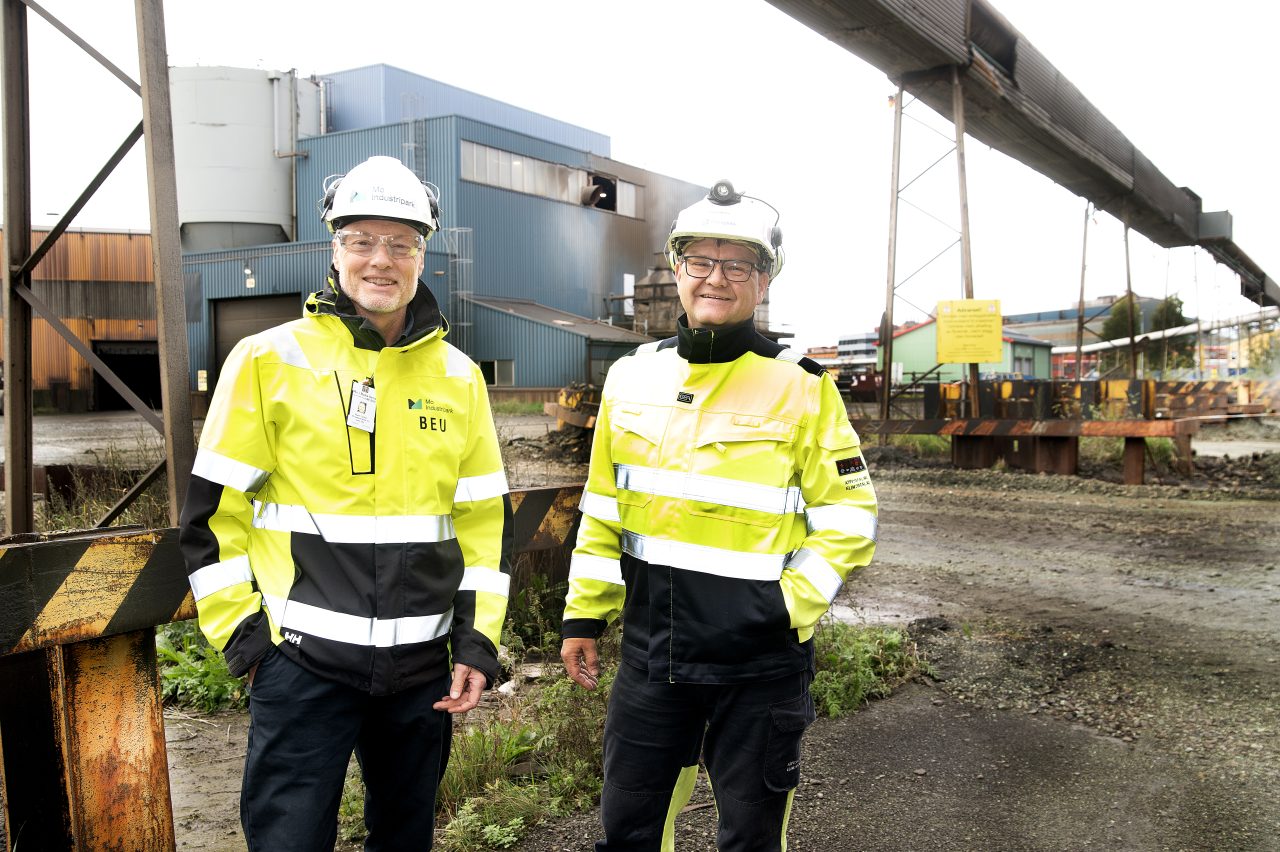
“We can essentially think of the system as a battery. The difference is that the energy is stored as heat rather than chemically, as in a conventional battery,” says Stein Espen Bøe, Managing Director of SINTEF Helgeland.
The project started on 1 May 2026 and will run until spring 2030. It is fully funded through the EU’s Horizon Europe research programme and brings together partners from several European countries. SINTEF Helgeland, Mo Industripark and Ferroglobe Mangan Norge are the three Norwegian participants.
Large Amounts of Energy
The project builds, among other things, on a detailed mapping of energy flows within Mo Industripark. This shows where energy enters the park, how it is used by the industrial companies and where it ultimately ends up.
Much of the energy is embedded in the products being manufactured. At the same time, large amounts are lost through cooling water, exhaust gases, slag and other forms of heat loss.
“We have very detailed knowledge of the energy flows within the park. There are few industrial areas where such a comprehensive overview exists of how energy moves between different companies,” says Bøe.
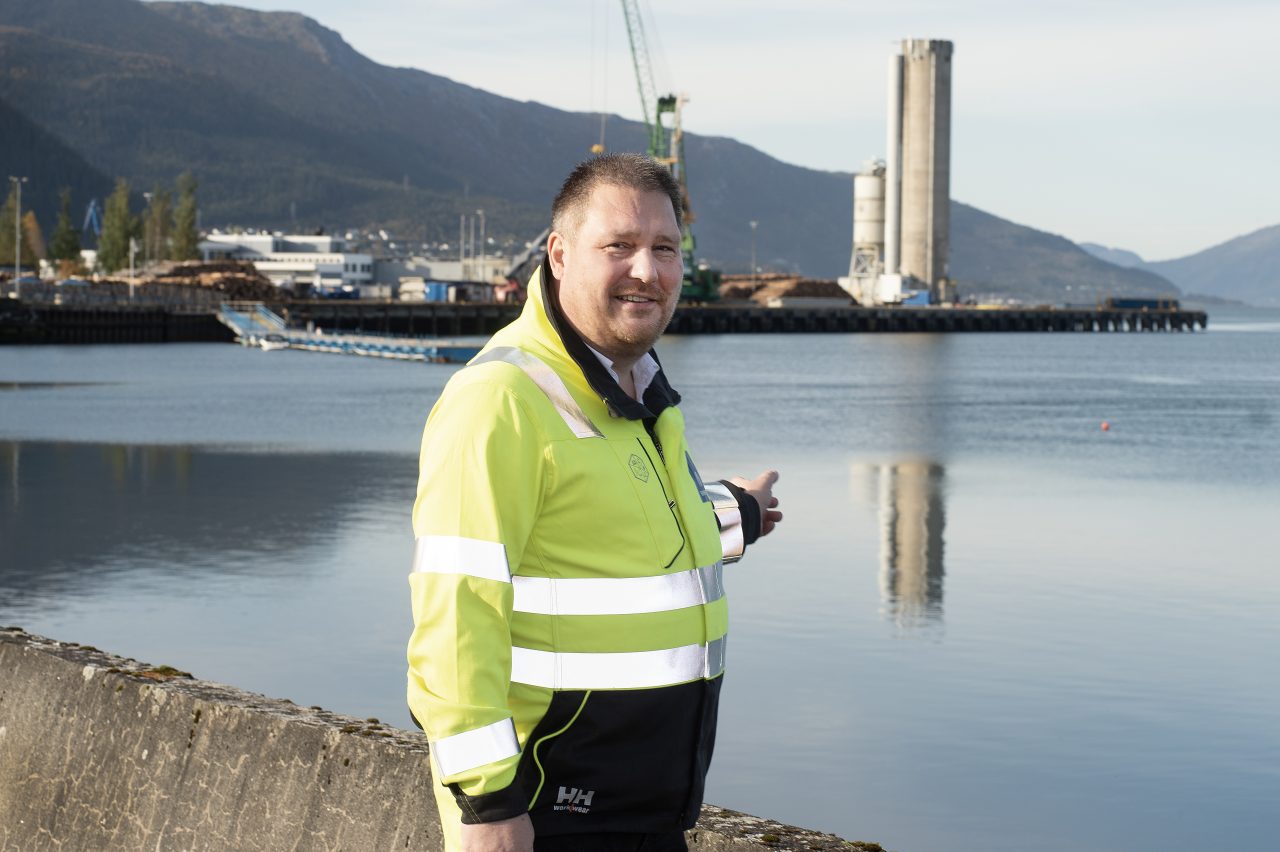
The local pilot will use low-temperature water from Ferroglobe. The company has large quantities of uncontaminated cooling water from its furnaces, as well as treated water from its water treatment plant. Today, most of this water is discharged into the main drainage system and eventually into the Ranfjord.
“We are working to find alternative uses for the low-temperature water, and RECITHERM is one of the projects exploring this,” says Geir Ove Storheil, QHSE Manager at Ferroglobe Mangan Norge.
The challenge is the temperature. The water is between 30 and 50 degrees Celsius, which is too low for direct use in the district heating network or for other purposes requiring higher temperatures.
“When temperatures reach several hundred degrees, it is much easier to make use of the energy. At around 50 degrees, we currently have few good applications. At the same time, there are enormous amounts of energy available at this temperature level,” says Fredrik Lundestad, Business Developer at Mo Industripark.
He sums up the challenge as follows:
“It is about how we can turn quantity into quality.”
Like a Giant Thermos
In the pilot plant, heat exchangers and compressors will be used to raise the temperature of the waste heat. This requires electricity. The heat will then be stored before later being used to generate electricity.
In simple terms, the system will function like a giant industrial thermos.
“We use electricity to raise the temperature and store the energy as heat. When electricity is needed later, we retrieve the energy again. The goal is to recover approximately the same amount of electricity as we used to charge the system, while also utilizing waste heat that would otherwise have had no useful application,” Bøe explains.
The technology could therefore provide an alternative to large electrochemical batteries. A thermal storage system would largely consist of familiar components such as steel tanks, heat exchangers, compressors and turbines.
“Batteries of this size are extremely expensive. The aim is to develop a solution that can store large amounts of energy, achieve at least comparable efficiency, and at the same time be less expensive and easier to operate,” says Bøe.
For Ferroglobe, the project fits well with the company’s systematic efforts to improve energy efficiency.
“More and more parts of society are being electrified. At the same time, we have an ageing power grid and many vulnerable natural areas. This creates major challenges in securing enough clean power in the future. A project that explores new ways of storing and utilizing energy therefore fits well with our energy strategy,” says Storheil.
Creating Value for the Companies
Mo Industripark is participating in the project through MIP Bærekraft, the collaborative programme between Mo Industripark and SINTEF Helgeland. The programme aims to facilitate research and development that creates value for the industries within the park.
“We have ambitions for the park as a whole and want to further develop the synergies between the companies. When a project can create value for the industry, we are keen to help make it happen,” says Bjørn Einar Ugedal, CEO of Mo Industripark.
Mo Industripark has a natural role to play when the pilot plant is eventually installed. The company owns both land and much of the infrastructure within the park.
“When something is going to happen in the park, we are often involved through the infrastructure. This also applies when new technology is developed, piloted and connected to existing facilities. In such cases, we will help create the right conditions,” says Ugedal.
He particularly highlights the possibility of utilizing low-temperature heat as one of the innovative and interesting aspects of the project.
“These are energy sources we have in abundance but have so far been unable to utilize to any significant extent. At the same time, the technology includes an energy storage element that could also prove useful. This makes it an important project for the park.”
Research and technology development are costly, and Lundestad believes international collaboration creates opportunities that would be difficult for individual companies to achieve on their own.
“Through a consortium like this, we gain access to both funding and expertise. It gives us the opportunity to investigate whether the technology works in a real industrial setting,” says Lundestad.
Pilot Plant Coming in 2029
Two pilot plants will be developed and tested through RECITHERM. One will be built in Portugal and based on solar thermal energy. The other will be located at Mo Industripark and will utilize waste heat from Ferroglobe.
The pilot plant in Mo i Rana is planned to have a capacity of approximately one megawatt. The equipment will be installed in containers in Poland before being transported to the industrial park and connected to Ferroglobe’s water flow.
The facility is scheduled to be ready for testing in 2029.
“We will investigate, among other things, how long the heat can be stored, how quickly the system can be charged and discharged, and how frequently it can switch between different operating modes,” says Bøe.
Until the pilot arrives, the local partners will collect the information needed to adapt the technology to conditions within the park. This includes mapping water volumes, temperature, water chemistry, particle content, grid capacity and potential locations.
Sustainability assessments will also be carried out, comparing the solution with both the current situation and the use of conventional batteries.
Potential for Wider Use
Although the project will test a complete system, the results could prove valuable in several ways. For example, it may be useful to apply parts of the technology to raise the temperature of waste heat so that it can be used by the district heating network or other companies.
“When the project is completed, we can choose to implement the entire solution or only certain parts of it. Perhaps raising the temperature will be the most interesting aspect. Perhaps storage or electricity generation will provide the greatest value,” says Bøe.
For Ferroglobe, the first potential benefit lies in making use of the water flow that is currently discharged into the Ranfjord.
“If the project succeeds, the technology could also be applied to other water sources in the longer term, such as cooling water from our furnaces. If the technology proves to work in practice, we will also share our experience with other plants within the Ferroglobe Group,” says Storheil.
The potential could also be significant for the industrial park as a whole. Several companies have sources of low-temperature heat that are currently utilized only to a limited extent.
“There are several sources of low-temperature heat within the park. If we can find ways to utilize them, it could make an important contribution to strengthening the circular economy within the park,” says Lundestad.
Categorised in: Frontpage, Industripark News
Del Del